


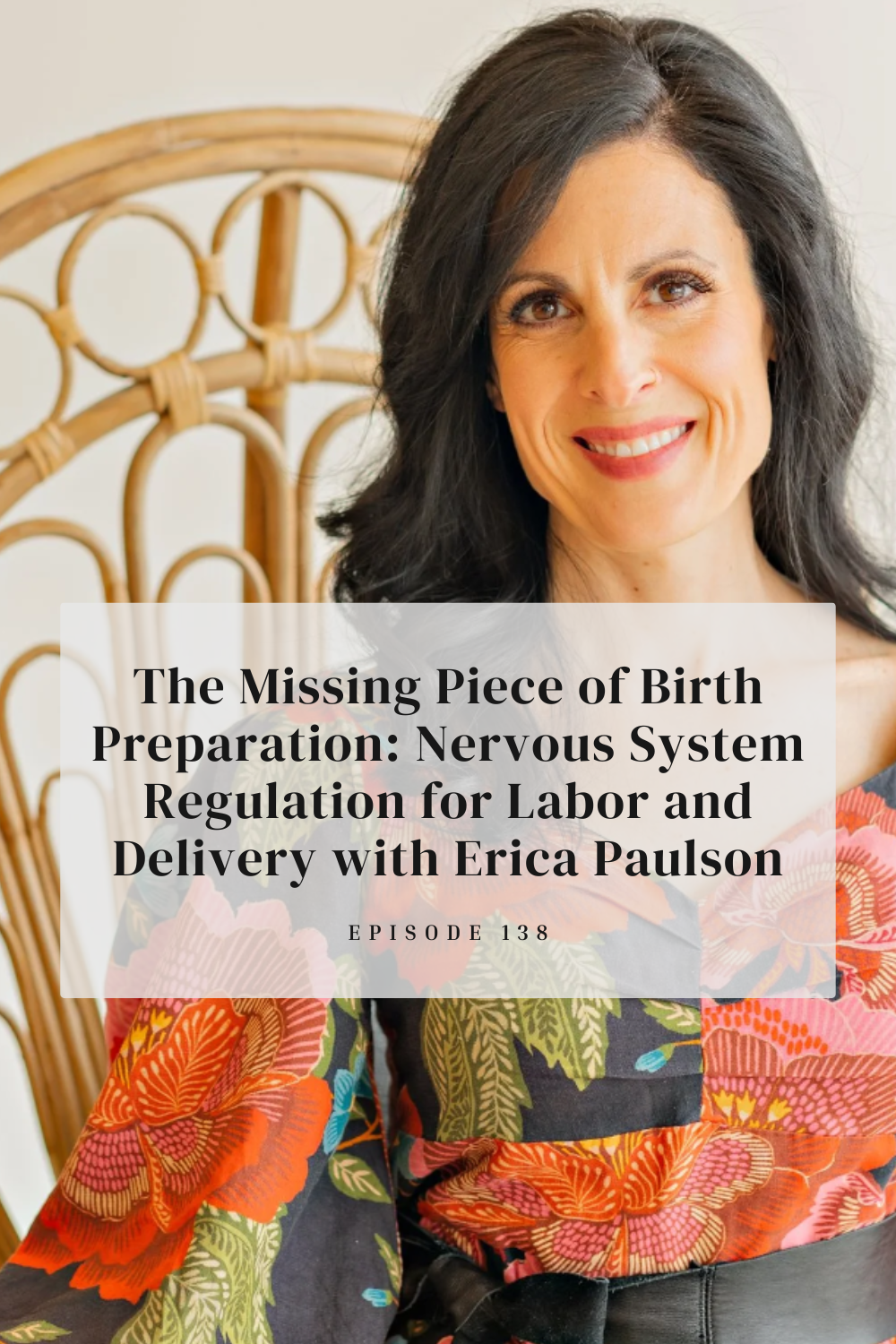
Erica Paulson is the founder and CEO of Nurture, where she brings nearly two decades of experience supporting families through pregnancy, birth, and postpartum care. Since 2006, she has personally worked with more than 1,000 families as a doula, childbirth educator, and maternal wellness advocate, helping create birth experiences rooted in both evidence-based care and emotional support.
In addition to being a Certified Labor Doula and Childbirth Educator, Erica is also a Certified Clinical Hypnotherapist and Prenatal Bonding Specialist. Her approach blends clinical understanding with nervous system awareness, emotional safety, and individualized care, allowing her to support families in a deeply holistic and compassionate way throughout the transition into parenthood.
Beyond her direct client work, Erica is actively involved in maternal health advocacy and has served on several regional advisory boards and birth organizations focused on improving support and outcomes for families. She is also an award-winning poet and author, recognized as Ohio Poet of the Year in 2022 for her poetry collection Hunger.
Browse my family's Cozy Earth favorites (and other best sellers) → Shop Cozy Earth (use code: wellmama at checkout to get 20% off your purchase)
Save your seat inside The Confident Mama Masterclass → Join the Workshop here
Apply for my coaching program and get access to HTMA testing here → Apply Today
Follow Erica on Instagram @birth_with _ease or visit her website: https://www.welcometonurture.com/ to learn more
Brooke Harmer: All right, sounds great. Hey Erica, thanks so much for joining us today. We're excited to have you here.
Erica Paulson: Thanks so much for having me. I'm really excited to be
Brooke Harmer: I love what we're going to be talking about today because this is something unfortunately I
Erica Paulson: here.
Brooke Harmer: did not learn until after I had had my first baby and it totally changed the way that I approach birth in general. and it's made such a difference in my second and third births. Um,
Erica Paulson: Um,
Brooke Harmer: so we're going to be chatting about the nervous system connection with birth and um I yeah, I'm just excited for you to like completely flip the script because what we have grown up seeing on TV is not accurate in the
Erica Paulson: yes. Oh, good.
Brooke Harmer: slightest.
Erica Paulson: I love flipping the script. So, that's going to be fun. I'm so glad we get to have this conversation.
Brooke Harmer: Oh my gosh. Perfect. Okay. So, before we dive in, tell us a little bit about yourself and how you became passionate about all of
Erica Paulson: Well, I started out as a mom. I mean,
Brooke Harmer: this.
Erica Paulson: I think what really drew me into the work that I do is giving birth to my children. So, I have four children of my own. I also have three stepkids, so I have seven kids. And when I first became a mom, I felt very prepared. Um, and now this was over 20 years ago, so my children are mostly grown now. But even back then, I felt like I was reading all the books that I needed to read and taking all the classes that I needed to take and like my mind like I felt like really prepared. And then when I actually went into labor, it was almost like everything that I had ever learned went out the window and I wasn't even thinking. It's like this part of my brain, my thinking part of my brain was gone. All that I was worried about was my baby. Is she going to be okay? and I felt myself kind of shuffled along this system and ended up with an unplanned C-section.
Erica Paulson: So, that was my first birth experience. And then after that, I started to think, well, first of all, like blaming myself. What did I do wrong? I thought I knew everything like how this wasn't the birth I wanted for myself or for my baby because she spent time in the NICU after that. Um, and then I was fortunate to get connected with a doula. Someone that I knew knew someone who was a doula. Doulas weren't as popular back then as they are now. So, I feel very fortunate that I was able to be connected with a doula. And that doula really changed a lot for me. Um, we didn't worry about she she wasn't interested in like what I had read or you know had I you know learned all the stages and phases of labor. It was like, "How are you feeling?" And you need to process your previous birth experience. And journeying through that whole birth was a completely different outcome. I had an amazing birth. I gave birth um to my big 10 lb V-back baby boy, unmedicated.
Erica Paulson: And at that time, I felt like I could change the world and I really wanted to pay it forward. And um that's what inspired me to become a doula myself. So since then, I have also been working as a doula. I'm a certified child birth educator as well. I'm a clinical hypnotherapist. So I teach hypno birthing and I've been a doula trainer for about 15 years. And so all of the work that I do in education um is more than just training your mind or doing all the right things. Preparing um the traditional way. It's really about um recognizing that birth is more than just a physical experience and really preparing intentionally for that experience. And it's it's a big difference I think from the way like you said the traditional child birth education has always
Brooke Harmer: I agree. I want to touch on something you said.
Erica Paulson: been.
Brooke Harmer: You talked about how your your your brain your thinking brain like shut off when you went into labor, right?
Brooke Harmer: Um,
Erica Paulson: Yeah.
Brooke Harmer: and I think that's so important to highlight because when we get into stressful situations, when we enter into an emotional situation, emotions become involved, whether that's fear, joy, passion, whatever, our thinking brain goes off, right? You imagine a 2-year-old who's in the middle of a meltdown. You can't logic your way out of a meltdown, right? You have to bring them out of the emotion. So,
Erica Paulson: right?
Brooke Harmer: I love that you highlighted that your thinking brain kind of switched off and that is so important for us to know going into birth because that really sets the stage for what you teach is that birth is a nervous system experience. So, can you talk to us about what that actually means and why that mindset shift around birth is going to completely change everything that happens?
Erica Paulson: Yeah. So, I think this is an really important topic and I'm really glad that we're getting to talk about it. Even now 20 years that I have been a doula and an educator, I still hear moms asking all the time, you know, what I I did everything right.
Erica Paulson: You know, I read all the right things. I took all the right classes. And so this is a mindset shift that really needs to change because it's not just your thinking brain that is giving birth. Birth is a whole body experience. And when we think about it, we have lived an entire life in our bodies up until the time that we give birth. So you're giving birth coming into it with your first sexual experience, maybe even your first period. So, what's been your relationship with your body and your fertility and that whole side of you up until the time that you gave birth to your baby? We need to recognize the life that a woman has lived inside of her body up until that point. So, that's why we can't just think like, oh, let's just start at the beginning, go through stages and phases of labor, tell you to do these things, and it's all going to work out, you know, fine. I think we're also redefining fine. you know, what does it mean to have a really positive, rewarding, empowering birth experience?
Erica Paulson: So, like you said, birth is not just a physical experience. You're not just a uterus that is, you know, delivering a human child. You're a whole woman. You're a complex body and mind and emotions and everything in between that goes into giving birth to your baby. So recognizing that that is needing to be part of your education is an important part of achieving the goals that you have hoped for yourself or for your labor and having a very positive rewarding birth experience and also leaving room for the unknown. We know birth is we can't control it, right? So there's a pathway that our baby's going to have a say in that too. How the birth unfolds is part, you know, they're they're weighing in on how that birth unfolds as well. So that um also connection between mom and baby is a really important part of understanding how to provide the support that moms need when they're giving birth to their
Brooke Harmer: Absolutely. I I thought of a movie quote while you were sharing that.
Erica Paulson: babies.
Brooke Harmer: You're like, "We need to redefine fine." And what came to my head was a quote from The Italian Job where they're like, "Fine stands for freaked out, insecure, neurotic, and emotional." And I feel like that totally applies.
Erica Paulson: Yeah.
Brooke Harmer: And we're like, "Yeah, it was fine." Like, we're trying so hard to um I don't know,
Erica Paulson: Right.
Brooke Harmer: I guess water it down so that we don't have a whole bunch of other feelings that show up with it,
Erica Paulson: Yeah.
Brooke Harmer: right? We don't feel shame.
Erica Paulson: Yes.
Brooke Harmer: We don't feel guilt. We don't feel um you know, maybe even FOMO that we didn't get the birth that we wanted. So, understanding that yeah,
Erica Paulson: Right.
Brooke Harmer: we're not shooting for fine. We want to we want you to walk away from birth feeling like you are the most incredible human being that just did the most incredible thing. And you know, no matter how it turns out, like you said, we can't plan exactly for what's going to happen with our birth, but having the mindset of I trust my body.
Brooke Harmer: I know how to work with my body and I am going to continue to listen to my body through this experience. I think totally changes how we would process something that doesn't go our
Erica Paulson: Yeah, you're absolutely right. And not just I trust my body,
Brooke Harmer: way.
Erica Paulson: but my care team does too. My doctor trusts me too. My midwife trusts me too. My doula, like the woman giving birth is the center. everything else is there to support her and assist her and provide what she needs to bring her baby into the world. And that's going to be different for all of us. Some of us are going to give birth by cesarian. That's one thing I learned about my cesarian birth is that was still a birth for me. My body still gave birth by cesarian. And I don't think there was anybody there that knew that except for me and for my baby. And so when I gave birth again, I brought that cesarian birth story into my next birth.
Erica Paulson: How could I not? That was part of my body. That's part of my life experience. So honoring that experience for the mother is very important. And not just oversimplifying things and saying, "Oh, you know, there's one way to do it and it's this way." And making such a narrow um funnel for her to try to squeeze herself through in that matressence journey in becoming a mom. um is unfair. Like birth is fierce. It's you know where it's not a it's not a tame thing. It's a very fierce um can be very empowering experience for a woman and to be there to support that and to honor that to say like I I am here by your side every step of the way. Whether you're her doctor or her midwife or her nurse or her doula or her partner, whatever, she needs that support from each one of those different people on her care team as she's going through that
Brooke Harmer: Absolutely. I want to backtrack for a second when you were talking about how moms are doing all the reading and they're taking
Erica Paulson: experience.
Brooke Harmer: the courses and they're learning about the stages of labor and they're learning about all the things that they can say no to at the hospital and right like all these logistics and these checklists and like we said
Erica Paulson: Yeah.
Brooke Harmer: our thinking brain the the brain that has the information that makes decisions based on information all that stuff. What do you feel like we're missing about birth and preparation for birth when it comes to the emotional and the nervous system and these other things that we can't really consciously think
Erica Paulson: So, I like that you talk about what's missing because we definitely need those things and we want to continue
Brooke Harmer: out.
Erica Paulson: to prepare in those ways with the checklists and with the things that we know that we need to prepare, but we also want to recognize the the body's experience of that nervous system experience and doing things like breath work, um relaxation, connection to your body, which we can do through things like guided meditations or yoga or those body
Brooke Harmer: He
Erica Paulson: work, mind body connection experiences, are ways that allow women the time to explore how am I feeling in my body right now?
Erica Paulson: How am I feeling about becoming a mom? If a woman is nervous about becoming a mom, um, she's going to bring that nervousness into her birth. And if nobody's there to listen, then nobody's there to support that. So, we need people to be asking her more than just, "Have you checked all these things off?" But first of all, how can I support you and and your checklist? What can I be doing to support you in these preparations? Because it's not just your job. You you don't have to do that alone. But second of all, how can I also honor what your body's experience is and what you're what you're going through and what you're feeling um to prepare for that? And then let's provide some tools to support you. Um sometimes a really great massage can be a wonderful way to release stress and tension physically, but also maybe some emotional tension. Um, that's one of the things here at Nurture that we have two massage therapists and a big reason that they're here.
Erica Paulson: They everything they do focuses around pregnancy and birth and postpartum. Um, and what the whole goal is there is that women will release things on the table that they might not have the words for, but their body really feels um, nurtured and cared for and supported with um, those body work therapies. So, kind of thinking outside the box a little bit. um thinking about things that you know you're might you might not be reading. In fact, even listening to a podcast, what happens when you listen to a conversation like this, you're listening to two people talk about things and you're thinking, I wonder how this applies to me. So, allowing yourself to kind of engage with different types of support systems that support your body's preparation and as well as that mental educational preparation because both are very important.
Brooke Harmer: Yeah, I love that you made sure to clarify that it's not about, okay, we either only do the logistics and the checklist or we're only focused on how do we feel in our nervous system. It's a combination of both.
Brooke Harmer: I remind moms all the time that you can't make an informed decision with
Erica Paulson: Right.
Brooke Harmer: confidence if you don't have information. So, we have to have the logistics. We have to have the checklist. We have to have some sort of a baseline understanding of, okay, well, you know, I'm going to start here. The contractions will be kind of like this. Then it might progress to here. This might be what I expect if I'm giving birth in a hospital or, you know, this is what my midwife is saying if I give birth at home, right? Like understanding that is a part of helping us feel emotionally safe and confident so that we can have the experience that we want.
Erica Paulson: Yes.
Brooke Harmer: Because if we go in blind, well, you have no idea what to expect. So, of course, you're going to be afraid.
Erica Paulson: Right.
Brooke Harmer: It's going to be hard to stay emotionally regulated if you don't know what to expect. So, it's understanding that yes, there are things logistically that will help you feel emotionally safe.
Brooke Harmer: And then it's also doing things specifically for your nervous system in preparation for that. So what does emotional safety in birth actually look like? And how is it going to change the way that we experience labor?
Erica Paulson: Oh, great question. So, emotional safety is about how a woman feels in that environment. Can she does she feel like she's in a space where she can relax, where she can turn her thinking brain off, you know, where she's not worried about who's doing what? Cuz we do this as moms, you know, we want to know. And sometimes maybe moms are going to be worried about other people in the room, their partner or maybe even their doula or other people who might be there with them when they're giving birth. If a woman is thinking about everyone else, she can't think about herself. She can't think about how she's feeling, what she's going through, or her baby. So, we want her focus to be able to be on herself. That is the most important thing that she can do to invest in her birth is to think about herself.
Erica Paulson: And I think that's hard for some moms. They feel like they're not allowed to do that. Um, and I I would like to see them doing more of that, but the only way they're going to do more of that is if they feel safe. So part of creating emotional safety is she needs support people around there who are going to have lots of tools available to her and accessible to her. She shouldn't have to ask for simple things, a warm blanket, ice chips, um a ball to sit on, a birthing ball or a shower. Um she should have all of her options. I would love them to be easily accessible, but also to have people there saying, "Here, I got you some water. Here, I got you something to eat." And if she says, "No, I don't want it." totally fine. She doesn't have to take it, but everything should be there available and accessible to her so that she can close her eyes and not even worry about is everything else in place. The other part of emotional safety is just feeling like people truly do believe in you.
Erica Paulson: You need to have a care team that believes in you as a woman who is giving birth to your baby and really honors you and respects you for who you are in that role. Um, we don't want to have a care team that thinks that they're the center. You're the center. So, the care team is really there to protect you and to provide safety and safe options for you. Um, but they're not there to override you and they're not there to, you know, sort of impart some narrative or a one-sizefits-all um plan for your care. This is about listening to you. So, we need to do a lot of listening and understanding, but also be there to provide the care because we want women to feel like, okay, I feel like I can totally be myself. Um, I know like for some of the moms that I've been with, some moms can be very vocal. They need to feel like I can be vocal. I can be naked. That's such a vulnerable space to be naked.
Erica Paulson: Oh my gosh, does anyone even realize we are literally physically naked in a room full of sometimes people that we don't know when we're giving birth? If you're going to be able to do that, then you need to feel safe. And maybe some of the ways that you're going to feel safe are to consider things like hydrotherapy. Maybe you're going to want to labor in a tub if that's available in the place where you're giving birth. Um because that can provide a sense of safety. Um, maybe you're not going to want to be completely naked. Maybe you're going to want to have a robe on and you're going to want everybody in the room to respect that. Or maybe you do want to be completely naked and you want everybody to be totally comfortable with that. What we really want to highlight is that there isn't one right or one wrong. But there is a right for you. And probably if you're listening, you're already thinking in your head, I know what one I am.
Erica Paulson: Okay, good. That's great. If you know what aligns with you, that's amazing. Now share it with your support people so that they know how to support you. So learning how learning what you need, respecting your needs and um valuing.
Brooke Harmer: I just lost your audio for just a second.
Erica Paulson: Oh no,
Brooke Harmer: Can you hear me?
Erica Paulson: I can't. Now you're back.
Brooke Harmer: Oh,
Erica Paulson: Can you hear me?
Brooke Harmer: that was weird. Now I can hear you.
Erica Paulson: Yeah.
Brooke Harmer: Yeah. Okay.
Erica Paulson: When did I cut out? Did I cut out for part of
Brooke Harmer: Um um I think the last thing I
Erica Paulson: that?
Brooke Harmer: heard was something about valuing what you need. I think it was like your last like your last two sentences or something.
Erica Paulson: Okay. Well,
Brooke Harmer: So we can like we can like splice it together however you want.
Erica Paulson: you're back.
Brooke Harmer: If you just want to like kind of re reiterate those last two sentences, we'll figure out how to make it work.
Erica Paulson: I think you got what I was saying is that just recapping value what you need and have support people who also value what you need is what's important.
Brooke Harmer: Absolutely. I think the underlying theme with everything that you were just sharing is we need to have a care team that we trust and a care team that's on board. And this is one of the things that I share with moms all the time that it's not just a matter of finding a provider or finding the best provider like the highest ranked on, you know, on Google or whatever in your go on
Erica Paulson: Yes.
Brooke Harmer: paper where they have the most reviews, they have the lowest cesarian rate or duh duh, they have the most letters behind their name, whatever. and they could absolutely not give two craps about what you think or what you want. And if that's the case and you feel like you don't have a voice, then they're not the best doctor for
Erica Paulson: Right. 100%. Yes. It could even just be something just inside of you gives you the ick and it doesn't feel right.
Brooke Harmer: you.
Erica Paulson: And maybe your best friend or your sister used that particular doctor and had an incredible experience. But that goes back to honoring how you feel. If it doesn't work for you, it doesn't work. And thankfully um we have usually several providers to choose from. We have doctors, we have midwives. So having those options and talk to your doulas. Doulas have the benefit of working with several different care providers both in and out of that birthing space. So they have that experience that might be really helpful to you. Um I love conversations like this. I hope women will go from hearing these conversations and realizing like I got to tell my birth story that, you know, as women, we want to hear the birth stories. I want all of the details. Don't spare me any of the details. Um, I'm very interested in that. So, as they're sharing their stories and they're sharing their experiences, feeling free to share their stories with their provider and being okay with being different.
Erica Paulson: Again, if your sister had an incredible experience with a provider, but it just doesn't align with you, then trusting that you can say that you can say, "Thank you so much for that recommendation. I just don't feel right about it. So, I'm going to choose somebody that feels like they're a better fit for
Brooke Harmer: And I want to remind the mamas listening that you are not in charge of other people's feelings.
Erica Paulson: me.
Brooke Harmer: You are not obliged to like people please or choose someone just because you feel like it'll hurt their feelings if you don't choose them. Like I mean at the end of the day the providers are like I will see whoever walks in my
Erica Paulson: Uhhuh.
Brooke Harmer: office, right? And I'm and that's not to say like they don't care about you,
Erica Paulson: Uhhuh.
Brooke Harmer: but it's this idea that you're not going to hurt their feelings if you go to them and then you walk away and you're like, you know, I don't feel like that's a really good fit. I'm gonna go choose another doctor.
Brooke Harmer: If they're offended by that, that's their thing,
Erica Paulson: Yeah.
Brooke Harmer: right? This is your birth experience.
Erica Paulson: 100%.
Brooke Harmer: This is your body that we that we're talking about. And you know, the same thing goes for um you know, the nurses that are in charge of you if you're giving birth in a hospital. If there's one nurse in particular, especially if it's the the head nurse, like the main nurse that's in charge of you at the hospital, and you guys are not getting along for whatever reason, you can actually request to have a different nurse be in charge of you. And I know that can feel like for the people pleaser and us millennials that are like over here
Erica Paulson: Yeah.
Brooke Harmer: just crawling into a corner like, "Oh my gosh, like I would reject somebody like that." Like, you can obviously do it in a kind way. you can just, you know, grab another nurse when they come in to check your vitals and say, "Hey, you know,
Erica Paulson: 100%.
Brooke Harmer: I don't feel like I'm really getting along with this nurse." And it's um
Brooke Harmer: it's making it it's how do I see I can't even say it because I'm trying to like people please, but it's it's making it hard for me to to really focus on my body and my birth. And I would just like to have a different nurse on my team. You don't even have to like say it to her face. you can just talk to another nurse and see if they can help you out.
Erica Paulson: Yeah.
Brooke Harmer: Like, you're not entitled to anyone else's
Erica Paulson: Yes. Thank you for sharing that because I do think that moms need to hear that and it's and I felt the same way when I
Brooke Harmer: feelings.
Erica Paulson: was a young mom. And you know why women feel that way? Because they're naked and vulnerable and their babies are involved. And on a hormonal level, we feel very protective of our babies and we don't want anything to happen to them. And we have this idea in our mind that we will just kind of put our body in front of anything that comes be between, you know, anything in our babies and we'll just kind of keep our mouth shut because we have this idea that that's what's best for everyone.
Erica Paulson: And you're right, it's really not necessary in that case. It's not you're not in danger of anything by asking for a different nurse if it doesn't you don't even have to give them a reason honestly. You can just say, "Hey, is it possible for us to switch nurses around? I think that might be better for me right now." No problem. No big deal. And it really is something that again you can process with your partner. You can process with your doula or whoever is there to support you because hopefully you do have support people. But yeah, we're not ple like Okay, so I have a question for you. Can you remember the birth of your first child?
Brooke Harmer: Yeah, pretty
Erica Paulson: No. And pretty well.
Brooke Harmer: well.
Erica Paulson: Okay. And do you remember what you did three weekends ago?
Brooke Harmer: Um, I'd have to sit down and think about it.
Erica Paulson: Right.
Brooke Harmer: Not off the top of my head now.
Erica Paulson: Right. So if you think about it, our births are like we can call it to to mind like at the drop of a hat.
Erica Paulson: No problem. I can tell you in great detail the birth of my children. If you ever want to, I'm happy to do that. Um, I don't really remember what I did three weekends ago either. I'd have to look at my calendar because it just wasn't that big of a deal to me. So, if it's this big of a deal to a woman, please don't do anything that's going to come between you and that experience for you. It doesn't matter if you need to ask for a different nurse. It doesn't matter if you need to switch providers. You will remember that day for the rest of your life. It is a big deal. It's might even be one of the most important events of your life. It's not just your baby's life. You carry it with you. That's your story. That's your life. Um, so yeah, please don't do anything to compromise what maybe a new nurse could do for you or just switching things up for you could do.
Erica Paulson: There's value in that, too. That's exactly what we're talking about in in valuing what that experience is because we know how much that matters.
Brooke Harmer: bringing it all back to the theme of nervous system experience. understanding that not only is that a memory that you're going to carry with you, but how you experience labor and delivery actually impacts your postpartum recovery. It impacts your relationship with providers in the future.
Erica Paulson: Mhm.
Brooke Harmer: It's it's an imprint like like we're talking about. It's an imprint on our nervous system that has these little fingers that goes into all these other places of our health, not just our memory.
Erica Paulson: Uhhuh.
Brooke Harmer: It's actually impacting our physical health in the first 12 months postpartum. How we process labor and delivery. Um if it was empowering, if it was fearful, if it was fine, right? But maybe you were a little bit disappointed that we're like it could have been better.
Erica Paulson: Uh-huh.
Brooke Harmer: wasn't bad, but it could have been better, and I wish I would have done this differently or whatever.
Brooke Harmer: It's a nervous system experience, and that is something that we're going to carry with us in all aspects of health
Erica Paulson: Mhm.
Brooke Harmer: moving forward. And that's so important to
Erica Paulson: Mhm. Yes, because you're right. It's not just about your mind.
Brooke Harmer: remember.
Erica Paulson: It is about your body. So, that experience can show up in um a stomach ache and a sense of like a panic attack. Um those experiences can also show up in very positive ways as well. Your heart fluttering um having those wonderful memories. And sometimes it's a combination of both challenging times and incredible times. Um and sometimes it can be traumatic. And even if someone can't really articulate what that trauma is, they might feel it in their body first and it might show up in their body first. So um this is why a birth experience. It's not just about giving birth, right? It's not just about del happy mom, healthy baby or being fine. Like that should be the baseline norm for everybody.
Erica Paulson: Everybody deserves that. From there, we can do so much more than fine. We should we should want and expect and hope for so much more than healthy mom, healthy baby like that is we can do better than that. So, this is where this conversation about the nervous system is important is that we're not just talking about like, oh, are you healthy? You know, did you leave the hospital? Did you get discharge papers and you're fine? You know, no, that's that's not really what we're interested in in terms of like a really good postpartum recovery and a postpartum time and in overall maternal wellness.
Brooke Harmer: Absolutely. So, kind of continuing along this line of thought, what what does stress and fear and like feeling unsafe actually look like while we're in labor and delivery? Because we can kind of see the trickle effects afterwards and postpartum, but what might it look like when we're in the moment? And how can we like have these systems in place to help us pivot if we notice that our nervous system is not doing great in
Erica Paulson: Okay, that's a great question. So, first, this might happen before you get into the birthing space.
Brooke Harmer: birth?
Erica Paulson: So, there's a thing that we say and that I talk about with the moms that I work with as a hypnotherapist, and that is what you resist persists, right? So, if there's something that you feel like you're resisting, and maybe this goes back to our conversation about being a people pleaser, like if you're like, "Oh, no, no, no. I can't talk about how I'm feeling. I have to shove that down." Well, then you're probably resisting something. So, please don't if if your subconscious mind is talking to you. You know, if your body is saying, "I feel anxiety going into the hospital space." Let's talk very practically. What is your body asking for? What is your mind? What is your nervous system asking for? Do we need to demystify that process for you? Um, you know, as a doula, somebody who works in the hospital all the time, I can tell you where to park, what door to walk in. Sometimes it's as simple as just like knowing what to expect beyond just the hospital tour.
Erica Paulson: That can really help to lower anxiety and honor that that sense of like, okay, this is how I'm feeling. So those feelings of like something I I need to listen to myself or I have this sense of um you know of anxiety or concern or worry. Um let's listen to that. That is a sign of stress. It could be in your stomach. It could be a chest tightening. Could be dry mouth. Um and you probably have experienced this at other times in your life before you ever had a baby. There's been times in your life where you're thinking, I wish I would have listened to myself. Okay, so you're going to listen to yourself now. And then sometimes in labor, things can kind of take us um for a ride and we don't expect like, wow, I wasn't really planning on being overwhelmed by, you know, whatever that is. Maybe um back to what you were saying about I'm just not vibing with the nurse. I really wasn't planning on that.
Erica Paulson: I felt totally good about everything and then um you know this this just isn't working for me right now. Um or maybe I'm nauseous. I wasn't really planning on throwing up the whole time that I'm in labor. And so, okay, very practically speaking, first of all, what are our options here? How do we respond quickly to that sense of stress or um th that those feelings that you have? your signs, your signals, their body telling youm things are not going well. I need you to listen to me. Um, it could be other things like contractions completely slowing down and going away and in a mom's mind she's like, I am just totally afraid of X, Y, or Z. Okay? And so, we need to recognize that again, it's not just her body, it's not just physically that we don't she doesn't just need more ptocin, right? So, she might need someone to talk to her about how she's feeling about the ptocin that she's getting. Maybe the birth experience, maybe it wasn't what she had expected, being able to release that and process that.
Erica Paulson: Doulas are very good about that. Um, partners can also be very good about that. So, just recognizing I would say those signs in labor and delivery so that we can respond. Recognize and then respond.
Brooke Harmer: I'd like to add to that that you might experience more pain if you're afraid or stressed out. Um, you know, clenching your jaw tightens your pelvic floor. It's it's really hard to get through contractions and even like in the pushing phase if you
Erica Paulson: Mhm.
Brooke Harmer: are so tight and so afraid that like you can't let yourself open up. Um, so simple things like that too where you're like,
Erica Paulson: Yes.
Brooke Harmer: um, okay, this is actually like a lot more unbearable than I was planning for or whatever, like you'll actually experience more pain because your stress and fear are raising cortisol and adrenaline rather than oxytocin.
Erica Paulson: Rafe.
Brooke Harmer: Um, I heard a a creator talk about how um, you know, the same way that you got pregnant is the same way that you should like support your birth experience.
Brooke Harmer: And she was talking about the oxytocin that comes from intimacy and really trying to find ways to support oxytocin during labor and delivery, right? So trying to step out of the the fear and the stress and say, "Okay, well, what can I do to support my nervous system and help my nervous system feel this rush of oxytocin from love and connection and excitement and all of these other things?" Not trying to like um you know, grin and bear it and just like fake it till you make it,
Erica Paulson: Right.
Brooke Harmer: but in a sense of hope and like reframing your mindset so that we're focusing on the
Erica Paulson: Yes.
Brooke Harmer: good.
Erica Paulson: That's what hypno birthing is all about. I did not give birth with pain. I didn't have pain in my labors. And the families that take my class, they don't have fa painful labors. That doesn't mean that it's not intense. So that doesn't mean that you don't feel anything. I believe that the need to be anesthetized at all even with a hypnothesia is directly related to the medicalization of birth.
Erica Paulson: We don't need that. That isn't what we're asking for when we give birth. But you really hit the nail on the head when you talked about that hormonal orchestration of labor and birth. Oxytocin causes contractions. It is an act of love of your body that brings your baby into the world. So when we kind of flip the script on that and we realize that love is powerful, powerful to the point that we did not even expect that kind of power, that kind of intensity, but your body's not going to do something that you can't handle. You're not ever going to have a contraction that your body made that's more from you. And when we talk about trusting, we're going to trust that. Now, does that mean that other medical support options or comfort options might become needed or wanted or necessary? Yes, they can be. That that that doesn't mean that it has to be all or nothing just like you said. But we're coming back to this place of recognizing no birth is not painful.
Erica Paulson: It's not terrible and horrible and you don't lose your mind and you know become this other version of yourself that you don't recognize. I think we have the opportunity to really step into the power of who we are as women when we give birth to our babies. And understanding that hormonal orchestration, that flow of labors is is part of that. It's beautiful how you said just it's love. Oxytocin is love. It's the highest levels of oxytocin that you'll ever have in your life is when your baby's born. They also have very high levels of oxytocin at that time because that's species survival, right? That's why we're here because we fall in love with these little humans that came from our bodies and this amazing thing happens when they're born. Um, and again, back to me being a C-section mom because I know that moms give birth in different ways. Um, that even if you had some early separation from your newborn, it's still there. So, bringing that newborn back, putting that baby skin-to-skin with you, it's going to kind of crank up your oxytocin engine and get that um bond happening between you and your baby.
Erica Paulson: It's not too late. Sometimes it can take time, but it's still there because it's in us. That's how that's how um we're made. That's how we give birth to our young.
Brooke Harmer: I love that you pointed out that contractions are an act of love because they're fueled by oxytocin. I think that is such a cool way to see it. So that when you're having contractions, you're like, "Okay, this is my body, you know, making it possible for me to finally meet my baby. This is my body taking care of me and my baby so we can get to the other side." Like just that simple reframe is so powerful. I love that. Um before we close, I'd love to ask you about your company um and how it really
Erica Paulson: Uh
Brooke Harmer: embodies everything that we've talked about today and how it can help us in our future birth
Erica Paulson: yeah. So,
Brooke Harmer: experiences.
Erica Paulson: nurture was born of my desire to create a full circle of nurturing support for women in their childbearing years.
Erica Paulson: So, we have everything from doulas, birth doulas, postpartum doulas. We have Ayurveda postpartum doulas that f focus on postpartum support through that Ayurvedic lens. We have hypnoirthing classes, all kinds of classes for parents um before and after they give birth. we have yoga. Um, and then we also have elective ultrasounds which is about prenatal bonding and massage therapy. So the it's so important to me and especially as an older mom now um I feel very passionate about supporting young mothers like you um and mothers that are on that childbearing journey in very practical, very accessible, very tangible ways that do go beyond education. um that just they can come into our space and they can receive these support services and it is a big part of that nervous system reset and connecting with body and mind. Um and we also have online classes so um even if somebody isn't local to us in Cincinnati, Ohio, people can connect with us through our online content. Um and drop me a line, send me an email. Like I said, I love a good birth story.
Erica Paulson: I love connecting with people and um I really have a heart for working with mothers now. Especially as an older mom myself, I believe that it's important for us as women to continue to support the motherhood journey because you are the you are bringing the next generation of humans into the world. And you deserve all of the support that is available to you as you have stepped up to that great calling.
Brooke Harmer: So, just to clarify, you're primarily an in-person business in Cincinnati,
Erica Paulson: Yes.
Brooke Harmer: but you do offer education and things like that online as well.
Erica Paulson: Yes,
Brooke Harmer: Okay, perfect.
Erica Paulson: you got it.
Brooke Harmer: So, yeah, if you're like Northern Kentucky, no, Cincinnati,
Erica Paulson: Yeah.
Brooke Harmer: Cincinnati, Southern Ohio, right? Okay,
Erica Paulson: Yes.
Brooke Harmer: I lost my mind for a second.
Erica Paulson: Yeah, you got
Brooke Harmer: Um, so southern Ohio,
Erica Paulson: it.
Brooke Harmer: northern Kentucky, um, maybe even like southeastern Indiana, somewhere around there in the Midwest. Um,
Erica Paulson: You got it.
Brooke Harmer: definitely give Erica and her company um, a try and see if they are a good fit for you.
Erica Paulson: Amazing.Brooke Harmer: And then if you are interested in any of the online services, we'll be sure to put all of your information in the show notes as well. Thank you so much for taking the time to meet with us today, Erica.Erica Paulson: It was great to meet with you. Thanks for the conversation. I really enjoyed it.Brooke Harmer: We would love to ask you one more question. It's a question I ask all my guests. We would love to know what is a non-negotiable to you to living a well-nourishedErica Paulson: non-negotiable to me is being outside,Brooke Harmer: life.Erica Paulson: connecting with nature, um, listening to my body and being in a space that I can really feel all the different elements interacting with my body is important to me. I spend a lot of time outside. I think I do a lot of thinking while I'm walking.Brooke Harmer: That's amazing. I was outside tanning before we got on our call today,Erica Paulson: I love it.Brooke Harmer: so I totally support that.Erica Paulson: Getting your vitaminBrooke Harmer: Yes. All right. Um, mamas,Erica Paulson: D.Brooke Harmer: again, we'll be sure to put all of Erica's information in the show notes if you're interested in connecting. And we hope we'll see you next week. Thank you.Erica Paulson: Thank you.Brooke Harmer: Thank you so much for your time today, Erica.Erica Paulson: That was fabulous.

Leave a review